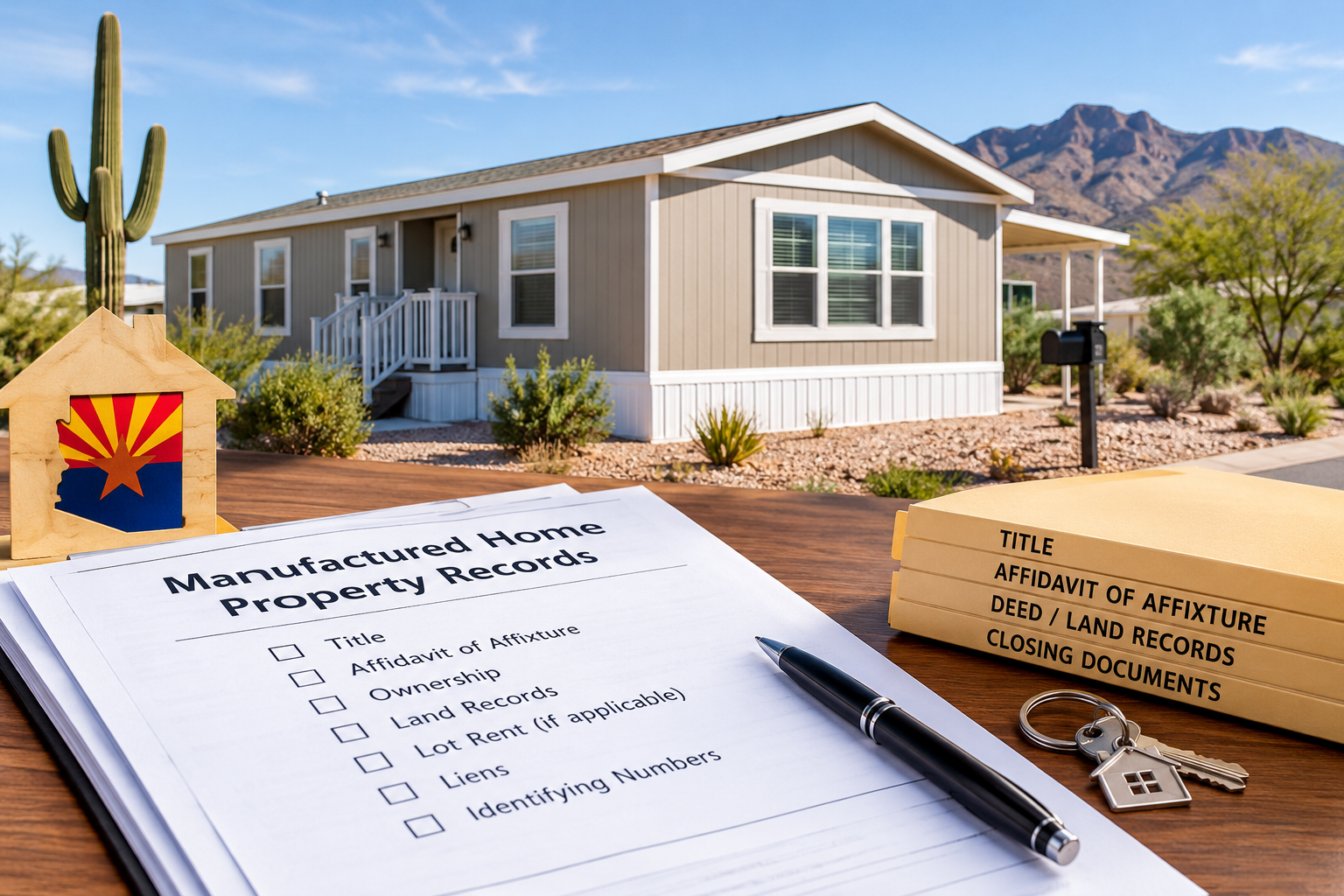
Don’t Assume the Paperwork Matches the House
You may think you’re buying or selling a house. With a manufactured home, there can be more than one set of records involved.
The home may or may not be legally part of the real property. The land may belong to someone else. The home may have its own title through the Arizona Department of Transportation Motor Vehicle Division (MVD). Or the home may have been permanently affixed to real property and have an Affidavit of Affixture recorded with the county.
That means you need to establish several things before you get too far into the transaction: What exactly is the home? What land is included? Who owns each part? How is each part recorded? And do the records agree?
The person handling the transaction matters, too. The rules can be different depending on whether you’re dealing with a manufactured-housing dealer or salesperson, a real estate licensee, or the owner directly.
With a manufactured home, the home, the land, the ownership, the records and the person handling the transaction all matter.
Is the Home Affixed?
One of the first questions is whether the manufactured home is permanently affixed to real property.
Arizona law generally defines a permanently affixed mobile home as one installed on real property owned by the owner of the mobile home (A.R.S. § 42-15201(2)). There are also specific rules for certain homes located in mobile-home parks where the land is leased rather than owned by the homeowner (A.R.S. § 33-1501).
This matters because an affixed home can be treated differently from a separately titled mobile home. The paperwork you need to review depends on which situation you’re dealing with.
If you’re not sure whether the home is affixed, don’t rely on how it looks. A buyer who goes by appearance can end up with paperwork for the wrong kind of home and no clear record of what they own. A home sitting on a foundation or looking like a permanent house does not tell you what the records say.
Find out how the home is legally treated before assuming you know what you’re buying or selling.
Is There a Recorded Affidavit of Affixture?
If a manufactured home has been permanently affixed, look for the recorded Affidavit of Affixture.
The affidavit contains information identifying the mobile home, including its vehicle identification numbers, and identifies the real property to which it has been affixed. Arizona law also addresses existing security interests in the home. It is not simply another version of the home’s title.
If the home is supposed to be affixed, you want to know whether the appropriate documents were actually recorded and whether they identify the home and property correctly.
Don’t assume a home is legally part of the real estate just because someone says it is. Check the recorded records. If it isn’t, you may own a home that you can’t legally keep on its lot or that you can’t sell as real estate.
Does MVD Still Have a Title?
A separately titled mobile home can have a certificate of title through the Arizona MVD. A manufactured home that is permanently affixed and has the required affidavit recorded is treated differently; MVD does not issue a title for a permanently affixed mobile home, and the existing title is surrendered as part of the affixture process.
So the question is not simply, “Where is the title?” The question is what records should exist for this particular home.
If someone tells you the home is affixed but there is still an MVD title, or says the home is separately titled but cannot produce the title information, stop and find out why before proceeding. Proceeding without an answer can leave you buying a home whose title and legal status don’t match, which can stall a later sale.
The title status should make sense with the way the home is legally recorded.
Do the Identifying Numbers Match?
Manufactured homes have identifying information that should be checked against the records.
Look at the home’s identification numbers and compare them with the title, Affidavit of Affixture and other documents that identify the home.
An affixed home can still physically have its original HUD certification label or data plate. That does not mean the home is still separately titled. The HUD information identifies the manufactured home; the MVD title and Affidavit of Affixture address different parts of the ownership and record-keeping trail.
The numbers are one of the simplest ways to make sure the paperwork you’re reviewing actually belongs to the home you’re buying or selling. Without that match, you could pay for a home while holding papers that describe a different one.
Who Owns the Home—and the Land?
This is where manufactured-home transactions can become very different from a typical house sale.
If the seller owns both the home and the land, you may be dealing with one ownership interest that is reflected in the real-property records.
But that is not always the situation.
A manufactured home can sit on land owned by someone else, including land in a mobile-home park. In that case, buying the home does not automatically mean you’re buying the land underneath it.
You need to establish exactly what the seller owns and exactly what you’re purchasing.
Before you discuss price, make sure you know whether the transaction includes the land, the home, or only the home. Paying full price for a home without its land, or assuming the land is included when it isn’t, can leave you with a home you have no right to keep where it sits.
Do You Own the Land or Pay Lot Rent?
If you are buying a manufactured home on leased land, the purchase price is only part of the financial picture.
For example, a $20,000 doublewide may sound inexpensive. But if the lot rent is $1,100 a month, the ongoing cost of the land is a major part of what the buyer needs to understand.
Before buying, find out the current lot rent, what it includes, how increases are handled, whether the buyer must qualify for the park, and whether the existing lease can be transferred. Also ask about transfer fees, application fees, park rules and any other charges that will apply to the new owner.
Most importantly, determine exactly what you are buying. You may be purchasing the manufactured home while leasing the land underneath it.
The price of the home does not tell you the full cost of owning a manufactured home on leased land.
Who Is Handling the Sale?
Don’t assume every person selling or helping sell a manufactured home has the same license or role. If the person handling the sale isn’t licensed for the work, you may have no one legally responsible for errors in the transaction.
Arizona has a separate licensing system for manufactured-housing manufacturers, dealers, brokers and salespersons. Arizona also licenses real estate brokers and salespersons, and the laws provide specific exemptions and situations where the two licensing systems overlap.
For a buyer or seller, the practical questions are simpler: Who am I dealing with? What are they licensed to do? Who do they represent? And what exactly are they handling for this transaction?
You may also be dealing directly with the owner in a for-sale-by-owner (FSBO) transaction. FSBO is not a license category. It simply means the owner is handling the sale without a real estate agent.
If you are buying or selling directly from the owner, consider having a licensed professional or attorney review the purchase agreement, bill of sale, title or affixture documents and other transaction documents before you sign.
Know who is handling the transaction and what responsibility they actually have.
Are There Liens?
A lien or security interest can affect your ability to transfer or sell the home.
The issue can also depend on whether the home is separately titled or has been permanently affixed. Arizona’s Affidavit of Affixture law specifically addresses security interests in permanently affixed mobile homes.
Don’t assume that paying off a loan means every record has automatically been cleared. An old lien that was never released can block a future sale or transfer, often when you’re ready to sell. Make sure the appropriate lien release or other documentation has been handled and that the records show what they should show.
If the home and land are owned separately, you may also have to consider liens affecting the land as well as obligations attached to the home.
Before closing, make sure you know whether anyone else has a financial claim against the home or property. A claim you miss before closing can become your problem after it, since you may end up responsible for a debt tied to the home or land.
Do the Records Agree?
At this point, you should be able to tell one consistent story. The home should be identifiable. The ownership should make sense. The land should be clearly identified. The title or affixture records should fit the way the home is being treated. Any liens should be addressed.
If one document says one thing and another says something different, don’t simply assume someone will fix it later. If nobody fixes it before closing, you’ll be the one dealing with the gap after the money has changed hands.
For example, a seller may say the home is affixed, but the available records may not support that. A title may identify a home that has since been permanently affixed. The person selling the home may not be the person shown as the owner in the records.
When the records don’t agree, stop and resolve the problem before signing or closing.
Before You Sign Anything
Before signing a purchase agreement or bill of sale, make sure you understand:
- What exactly you are buying or selling.
- Whether the home is permanently affixed.
- Whether there is a recorded Affidavit of Affixture.
- Whether an MVD title exists and, if so, whether it is current.
- Whether the home’s identifying numbers match the records.
- Who owns the home.
- Who owns the land.
- Whether the land is leased and what the current lot rent and other charges are.
- Who is handling the transaction and what they are licensed to do.
- Whether there are liens or other financial claims.
- Whether the records all agree.
If something doesn’t make sense, get help before you sign rather than trying to straighten it out afterward. The safest time to find a paperwork problem is before you become legally committed to the transaction.
The Short Version
Buying or selling a manufactured home is not necessarily complicated, but you need to know what you’re actually dealing with. Verify the home, the land, the ownership and the records. Make sure you understand who is handling the transaction and what responsibility they have. If something doesn’t line up, resolve it before signing or closing. That way, you know what is being bought or sold and what still needs attention before you move forward.