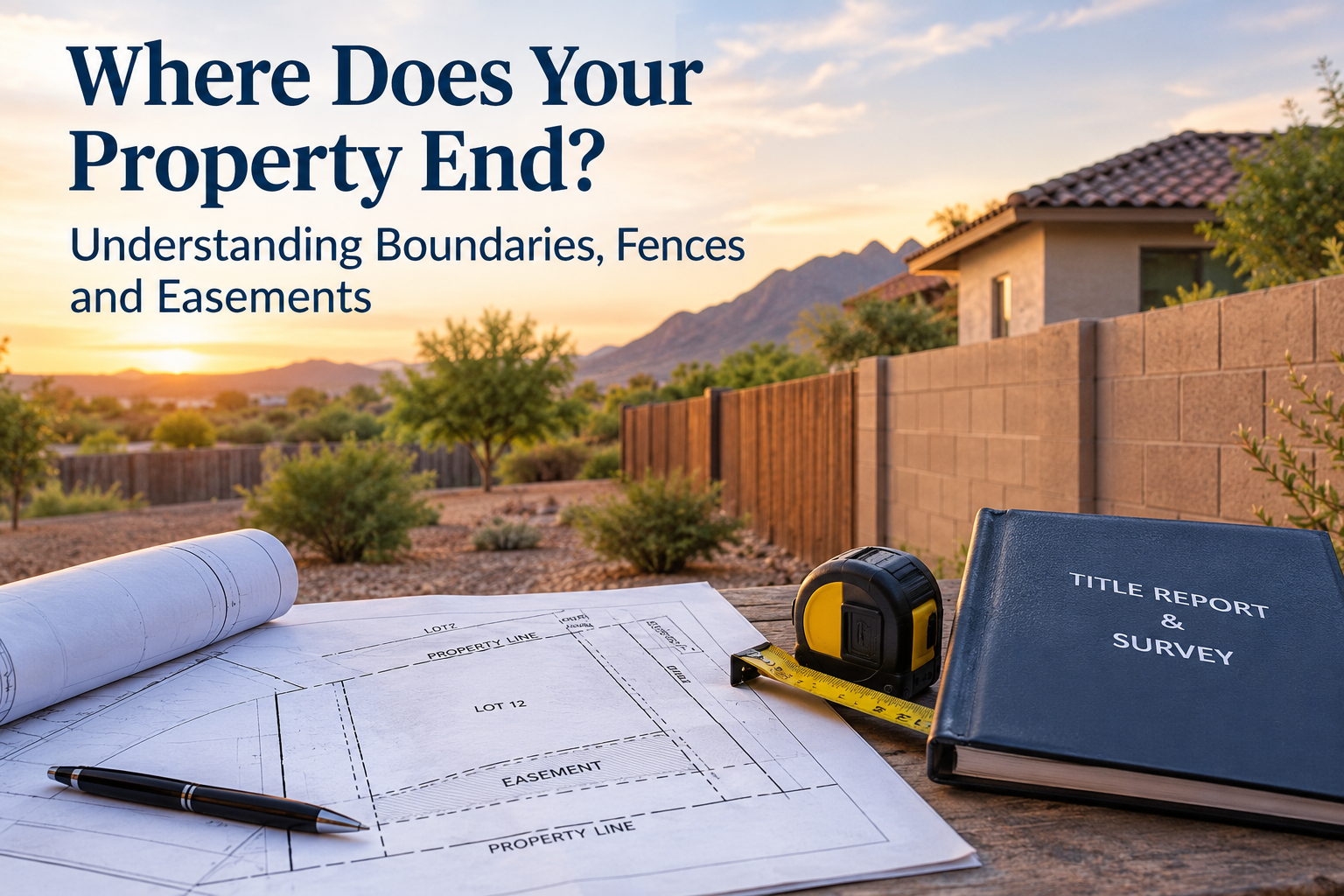
Most buyers don’t think about property lines until they plan a pool, a new block wall, or a patio. That’s when questions about boundaries, easements, drainage, and access become important. A project that seemed simple can become expensive if an easement limits where you can build, a drainage plan restricts changes to the yard, or a right of access affects how the property can be used.
In Arizona, even a home in a well-planned HOA subdivision can have recorded rights and restrictions that shape what you can do with the land. Finding them before closing gives you time to investigate. Finding them afterward usually means changing plans or paying to fix the problem.
Your Property Line May Not Be Where the Wall Is
In a subdivision, the recorded plat generally establishes the lot boundaries. A fence, block wall, or hedge doesn’t always mark the exact legal line. Walls are often built along property lines, especially in newer subdivisions, but older properties and later improvements can leave the wall a few feet off.
That gap matters when you replace a wall, install a pool, or build an addition near the boundary. A small discrepancy can turn into a costly problem if construction crosses the line or violates a setback. If the boundary is uncertain, review the recorded plat and any available survey before you start the project.
What a Survey and Title Report Tell You
A survey and a title report answer different questions, so you’ll usually need both.
A survey shows property boundaries and where visible improvements sit in relation to them. Depending on its scope, it may also show easements. An old survey may not reflect later improvements, so an older survey doesn’t settle current boundary questions.
A title report identifies recorded matters affecting ownership, including easements, liens, and restrictions. It doesn’t always explain the details. The recorded document usually does, because it describes an easement’s location, purpose, and limits.
If the seller doesn’t have a survey, consider ordering one during the inspection period, especially if the boundary is unclear, a fence or wall appears out of line, or you plan to build near a property line or easement. Ask the surveyor what the survey will cover before you order it. A standard boundary survey may not answer questions about grading, elevation, or drainage.
Easements: Rights Others Hold on Your Land
An easement gives someone a defined right to use part of your property for a specific purpose. You still own the land, but the easement can limit what you do there. The details matter. A right to access a utility line is very different from a right to use a driveway to reach a neighboring parcel.
Utility easements can give providers the right to access underground or overhead lines and related equipment. Depending on the easement’s terms, permanent structures, pools, or certain trees may be restricted, and improvements may need to be moved or removed to allow access. If you’re planning a pool or addition, check whether any utility easement crosses the site before you finalize the design.
Drainage easements are especially important in Arizona. Subdivision grading plans often direct water through designated areas. Walls, landscaping, or fill that block or redirect that flow can create problems for your lot and your neighbors. Before you change grades, build a wall, or add substantial landscaping, confirm whether drainage requirements or easements apply.
Ingress and egress easements give a legal right to enter and leave property over a set route. Physical access doesn’t prove legal access. Confirm how access is established, where the route runs, and whether the recorded rights are adequate for the property’s intended use. If the rights are unclear or disputed, resolving the issue can require legal work, negotiation, or expense. It’s much easier to confirm access before closing.
Fences, Walls, and Responsibility
In many Arizona subdivisions, block walls were built during the original development. They make boundaries easier to see, but they don’t guarantee that every wall sits exactly on the line or that responsibility for it is obvious. Problems often come up when a wall needs repair or replacement, when neighbors disagree about cost, or when one owner wants to change a wall near the boundary.
Responsibility can depend on the wall’s location, recorded documents, applicable law, and HOA rules. Two yards separated by a wall don’t automatically mean the wall is jointly owned or that repair costs are shared. Check the recorded documents and HOA rules before you assume either.
HOA Rules and Approval Requirements
Owning the land doesn’t mean you can make every improvement you want. An HOA may require architectural approval for a pool, patio cover, addition, wall change, or landscaping project. Setbacks, zoning, building codes, and recorded restrictions can also limit what you can build and where.
These rules are separate from easements. An improvement can sit entirely inside your boundaries and outside any easement and still require approval. If a pool or outdoor space is part of why you want the property, review the HOA documents and approval requirements before you commit. A neighbor’s existing improvement doesn’t prove yours will be approved.
HOA restrictions and approval requirements must also comply with applicable law. Arizona law limits certain restrictions in specific circumstances, so review the governing documents and applicable requirements rather than assuming every HOA restriction is enforceable.
What to Do If Something Doesn’t Match
If the fence, wall, survey, title documents, or access arrangements don’t agree, investigate before you decide anything. A mismatch doesn’t always mean a serious problem, but ignoring it can leave you with fewer options after closing. Depending on the issue, the next step might be an updated survey, a review of the plat and easement documents, a call to the HOA, or a request that the title company clarify a recorded matter.
Knowing where your property ends and where others’ rights begin protects both your investment and your plans. The best time to ask these questions is before you make an offer or close, while you still have options.